
Scholarship of Teaching and Learning (SoTL) grants
Meet our past SoTL grant recipients and find out how to apply.
The Scholarship of Teaching and Learning Grant Programme provides a contestable fund that supports colleagues in developing their educational leadership capability, and funds projects that are aligned to the University’s institutional priorities.

Image by Pixabay
2025 recipients
Development and Innovation Grant
Small-scale projects

Associate Professor Darren Powell
Faculty of Arts and Education
Food pedagogies: A recipe for relationality
This project redesigns HEALTHED101: Food and Education to boost student engagement through shared cooking and eating experiences, supported by reflective tasks and student-led inquiry. These activities aim to build belonging, deepen understanding of connections between food, culture, and wellbeing, and strengthen relational learning for diverse students.
Key findings on engagement and achievement will inform future course design and be shared through a peer-reviewed publication and faculty presentations, with plans to expand food pedagogies into teacher education programmes.
Profile: Darren Powell

Dr Shyamli Sindhwani
Faculty of Science
AI-Supported Conversational Assessments for Scalable and Authentic Learning Evaluation
Shyamli aims to address challenges posed by the use of generative AI in assessment tasks by developing an AI-supported tool for secure, conversational evaluations. The system will generate personalised questions, enable short voice or chat-based sessions, and provide automated reports to help teachers verify genuine understanding.
The pilot will run in COMPSCI 235: Software Development Methodologies to test scalability and effectiveness in project-based learning. This approach aims to complement traditional exams, enhance integrity, and offer a flexible, fair method for assessing individual knowledge in the age of AI.
Profile: Shyamli Sindhwani

Dr Talia Xu
Faculty of Science
Rust-based xv6: Modernising Core Computer Systems Education
The Grant will fund improvements to core computer systems courses by replacing the traditional C-based environment—its inherent complexity often distracts from the learning goals—with a modern Rust-based operating system. This approach reduces language complexity, allowing students to focus on core systems concepts while gaining industry-relevant skills.
The goal is to refine an existing prototype, pilot it in a Stage 3 course with ~200 students, and evaluate outcomes through performance comparisons and feedback. If successful, the tool will scale to benefit over 300 students annually, aligning teaching with contemporary practice and enhancing learner success.
Profile: Talia Xu

Dr Emily Parke
Faculty of Arts and Education
Accessible Multimedia Tools for Engaging with Philosophical Material
Emily aims to improve accessibility in philosophy courses by creating multimedia tools—podcast-style recordings and short explainer videos—that make complex readings more approachable. These resources will provide commentary, context, and examples to support students facing language, literacy, or neurodiversity-related challenges.
The pilot will focus on key readings in Philosophy of Science and Philosophy of Biology, with materials tested and refined based on student feedback. This initiative promotes inclusion and engagement, offering a model for accessible pedagogy that can be adapted across philosophy and other humanities disciplines.
Profile: Emily Parke

Dr Emalani Case
Faculty of Arts and Education
Critical and Creative Assessments in the Pacific Studies Classroom
This project redesigns assessments in PAC 200: Theorising Pacific Studies to create a more scaffolded, collaborative, and AI-resilient approach. The new design will integrate group work and creative tasks, culminating in a zine-making assignment (a hand-crafted book or magazine) that encourages critical and creative engagement.
The project includes research on creative assessments, development of rubrics, and hands-on zine workshops in tutorials. Student feedback will inform future improvements, with plans to share insights with Pacific Studies staff and publish on innovative assessment practices in the discipline.
Profile: Emalani Case

Dr Jonny Stephenson
Faculty of Science
Assessment for learning in general mathematics courses
This project aims to address the growing reliance on AI-generated answers by introducing short, low-stakes quizzes in tutorials for large mathematics courses (MATHS 108 & 208: General Mathematics 1 & 2, and possibly 102: Functioning in Mathematics). Students will prepare from a question bank, then complete one randomly assigned question under test conditions, promoting genuine engagement and understanding.
The project will analyse links between quiz performance and exam results, alongside student feedback, to evaluate impact. If successful, this assessment model could be scaled across mathematics and adapted for other disciplines to strengthen active learning and critical thinking.
Profile: Jonny Stephenson

Dr Blake Bennett
Faculty of Arts and Education
Enhancing Student Learning Through AI-Supported Video Editing: A Pilot Using Descript to Create Accessible Learning Media
This initiative pilots the use of Descript, an AI-powered editing tool, to create short highlight videos and discussion podcasts from lecture recordings. The approach offers students flexible, accessible ways to revisit key concepts without the time and technical barriers of traditional editing.
The pilot will run in SPORT 101: Making a difference in Sport and SPORTHPE 103: Biophysical Foundations, producing 5–10 topic-specific videos and podcasts, and evaluating engagement through surveys and analytics. Findings will inform scalable strategies for AI-supported media creation across the University, enhancing post-class learning and reflection.
Profile: Blake Bennett

Dr Petra Nianqi Tang
Faculty of Science
Technology-Enhanced Learning in Gravitational Wave Astrophysics: Building Reusable and Inclusive Materials
Grant funding will help develop reusable teaching resources that integrate real gravitational wave observational data, showcasing New Zealand’s contributions to this cutting-edge field. Initially implemented in PHYSICS 356: Astrophysics, the materials will be adaptable for other courses, school visits, and outreach.
Students will engage in research-based tasks using authentic data, building interdisciplinary skills in physics, mathematics, and computational methods. The project aims to create scalable resources that enhance learning, support outreach, and inspire future scientists, aligning with institutional priorities for research-integrated teaching.
Profile: Petra Nianqi Tang

Professor Alys Longley
Creative Pedagogies and Artistic Research Network UoA : A collaborative project supporting creative pedagogies in the University context
This project further enhances the Creative Pedagogy Network (CPN) to foster collaboration and research on relational and artistic teaching practices. Through ideation sessions, research-sharing events, and a writing retreat, the initiative will develop principles and strategies for creative pedagogy and publish them on TeachWell.
The objectives are to sustain interdisciplinary connections across Arts and Education, support co-authored scholarship, and lay the groundwork for future research proposals. This work highlights creativity as a core principle in teaching and learning at Waipapa Taumata Rau, University of Auckland.
Profile: Alys Longley
Scholarship of Teaching and Learning / Discipline-Based Educational Research Grant
Medium-scale projects

Associate Professor Frauke Meyer
Faculty of Arts and Education
Trialling Mixed-Reality Simulations to Improve School Leaders’ Communication Skills
This project introduces mixed-reality simulations to help aspiring school leaders practice challenging conversations in a safe, authentic environment. Using trained actors and Zoom-based scenarios, students in EDPROFST 738: Educational Leadership will develop empathy, active listening, and problem-solving skills while receiving behavioural evidence for reflection.
The pilot will test the efficacy of simulations as both a learning and assessment tool, ensuring accessibility for on-campus and online students. Outcomes include an assessment framework, practical guides for integrating simulations into teaching, and a foundation for future research and cross-faculty innovation.
Project lead: Frauke Meyer
Additional team members: Associate Professor Jess Harris (University of Newcastle, Australia), and Associate Professor Kylie Lipscombe (University of Woolongong, Australia)

Param Iyer
Business School
Ready-to-Run Tactile and Digitised Learning Kits for Operations and Supply Chain Management
This work involves building a library of experiential learning toolkits for topics taught in Operations and Supply Chain Management (OSCM). Examples are: line balancing, bottlenecks, inventory control, and process design. Each kit combines tactile materials with digital tools, enabling lecturers to deliver hands-on activities with minimal preparation.
The initiative aims to boost engagement and applied skills in OSCM courses by translating research-based practices into reusable resources. Six kits will be piloted in 2026, with expansion planned for 2027. Outcomes include improved learning, scalable teaching resources, and improved alignment with Taumata Teitei (Strategic Vision 2030) and curriculum transformation goals.
Profile: Param Iyer

Dr Cody Mankelow
Faculty of Engineering and Design
Sustainability education in FoED: exploring the diversity in teaching and learning
This project will benchmark sustainability education across the Faculty of Engineering and Design (FoED) and identify gaps and opportunities for improvement. It will map current practices in teaching sustainability, review international best standards, and explore how diverse cultural worldviews can shape the curriculum.
Outcomes include a comprehensive curriculum map, a repository of teaching resources, and recommendations for advancing FoED toward global best practice. This work aims to position the faculty as a regional leader in sustainability education and strengthen alignment with the strategic priorities of Taumata Teitei Vision 2030.
Profile: Cody Mankelow


Dr Shyamli Sindhwani, Dr Thomas Lacombe, Anna Trofimova, Dr Mark van der Klei
FACULTY OF SCIENCE
Rethinking Assessment in the Age of AI: A Framework for Assignment Design that Supports Student Learning in Open-GenAI Environments
This project develops a framework for learning-centred assignment design and an open-access resource repository to help teachers design assignments that foster deep learning while acknowledging Gen-AI use. The framework emphasises transparency, human thinking, iteration, reflective learning, and authentic knowledge application.
Pilots across Computer and Biological Sciences will test the model through student reflections, instructor feedback, and case studies. Outcomes include an evidence-informed framework, rubrics, templates, and examples that support meaningful, integrity-focused assessment design in the era of AI.
Co- project leads: Shyamli Sindhwani, Thomas Lacombe, Anna Trofimova, Mark van der Klei
Additional team members: Dr Julie McIntosh, Caroline Aspden


Professor Matire Harwood, Dr Gülay Dalgıç
FACULTY OF MEDICAL AND HEALTH SCIENCES
Building a Community-Engaged Curriculum: A Practice Plan for Medical and Health Sciences
Matire and Gülay will investigate best practices for integrating community engagement (CE) into health professional curricula. It will conduct a systematic review of global evidence and gather qualitative insights from diverse communities, including Māori, Pacific, disability, rural, migrant, and Rainbow groups.
The project aims to develop recommendations for embedding CE into curriculum governance and evaluation within FMHS, ensuring health education is equitable, culturally responsive, and aligned with community priorities. Outcomes include an evidence-based practice plan, strengthened partnerships, and improved student preparedness for culturally safe care.
Co- project leads: Matire Harwood, Gülay Dalgıç
Learning Leaders Grant
To build capacity


Dr Judy Thomas, Dr Estelle Watson
FACULTY OF SCIENCE
Teaching in Motion: The development of a Relational Learning Hub to Enhance Pedagogy in Exercise Science
This project aims to develop an evidence-informed online platform and community of practice to support Exercise Science educators. The platform will provide practical teaching tools, research summaries, and ready-to-use resources for active learning, while fostering collaboration and ongoing SoTL engagement.
Key deliverables include a publication on pedagogical training and its challenges, the launch of the online platform, international dissemination at the ESSA Research to Practice Conference, and the establishment of a community of practice. These outcomes aim to enhance teaching quality, reduce time barriers, and strengthen educator capability through scalable, research-informed strategies.
Co- project leads: Judy Thomas, Estelle Watson


Dr Ashwini Datt, Dr Marion Blumenstein, Dr Bettina Schwenger
CROSS-FACULTY PROJECT
AI for Learning: Building Teacher Competencies and Capabilities
This project responds to the challenges posed by generative AI by creating a university-wide network to support reflective, evaluative teaching practices, and to support the integration of AI into teaching and learning through structural changes to assessment design such as the ‘two-lane approach’. The initiative aims to promote the critical embedding of AI to enhance personalisation of learning and support student agency.
Deliverables include a scoping exercise to assess AI literacy among staff, establishing a teaching focused network on AI integration in higher education that is accessible across varying levels of AI literacy (basic to advanced), curated use cases to inform pedagogical intent, and cross-faculty workshops showcasing practical innovations. Outcomes will be shared locally and internationally, fostering collaboration and innovation in AI-assisted teaching and learning.
Co- project leads: Ashwini Datt (Faculty of Medical and Health Sciences), Marion Blumenstein (Faculty of Science), Bettina Schwenger (Faculty of Arts and Education)

Professor Gary Barkhuizen
Faculty of Arts and Education
Developing, trialling, and researching research-based cases in language teacher research education
This project trials case method pedagogy in LANGTCHG 757: Conducting Research in Applied Language Studies to prepare teacher researchers for the socio-political and technological challenges of education, including AI. Students will engage with research dilemmas through dialogic discussions and tutorials, focusing on developing critical thinking and collaborative problem-solving.
The project will evaluate the method through surveys, inform the development of a research casebook, and share findings via seminars, workshops, and publications. Outcomes include innovative teaching resources and leadership in advancing case-based pedagogy in language education.
Profile: Gary Barkhuizen

Dr Jay Gong
Faculty of Medical and Health Sciences
Staff and student acceptability of an AI-driven Clinical Pharmacy Virtual Tutorial
Jay aims to evaluate the ClinPharm Tutorial—a purpose-built AI teaching tool designed for pharmacy education and the first of its kind in New Zealand—exploring its effectiveness in developing communication skills and supporting case-based learning among BPharm students and teaching staff.
Through observation and interviews, the study will assess user acceptance of the technology, and its content quality and pedagogical value. Findings will inform AI integration within pharmacy curricula. His future plans include extending the tool to Pharmacy students at the University of Hong Kong and other health professions. Through these partnerships, Jay hopes to contribute to evidence-based educational innovation both locally and abroad.
Project lead: Jay Gong
Additional team members: Associate Professor Amy Chan (Faculty of Medical and Health Sciences, University of Auckland), Dr Franco Cheng (University of Hong Kong), Adam Wright-St Clair (Faculty of Medical and Health Sciences, University of Auckland), Dr Sara Hanning (Universitas 21 pharmacy discipline member)
2024 recipients
Development and Innovation Grant
Small-scale projects

Dr David Cumin
Faculty of Medical and Health Sciences
Development of a tool for data analysis and visualisation of biological rhythms
David proposes to develop a browser-based tool that enables students and researchers to analyse and visualise biological rhythm data without requiring programming knowledge. The tool aims to avoid current inefficiencies created by complex software installation and restrictive commercial licenses. A working prototype is already online and the improved version is expected within six months for implementation in Semester Two.
The tool has potential to expand into more general data-analysis tasks and visualisations for applications across a broad range of disciplines.
Profile: David Cumin

Dr Barbara Martelli
Faculty of Arts and Education
Italian Creative Writing: Crafting Stories as a Pathway to Enhance Language Skills
This project introduces a creative writing module into Italian 300, providing opportunities for creative composition of Italian storytelling. The module aims to strengthen advanced language proficiency and offer students an alternative to grammar‑focused learning.
The integration of AI‑assisted translation tools, plus traditional tools like SDL Trados, MemoQ, and Wordfast, will support students’ learning through accuracy of translation and language subtleties. It also builds on an earlier creative writing course taught at another institution, with comparative data providing insights into the efficacy of various teaching methods on student engagement and language acquisition.
The project will culminate in providing a flexible model that could be adapted across other language programmes.
Profile: Barbara Martelli

Dr Susann Wiedlitzka
Faculty of Arts and Education
Teaching dataset for CRIM705 Quantitative Criminology
Susann’s work will further develop her blended learning approach to CRIM 705: Quantitative Criminology—which models scholarly, or workplace practices associated with the criminological research profession—by securing access to an authentic local dataset from the New Zealand Crime and Victims Survey (NZCVS). This responds directly to student feedback requesting more locally relevant, criminology‑specific data, enabling students to practise real‑world quantitative analysis within a local context.
Integrating the dataset into the curriculum enhances research‑informed teaching and supports student preparedness for postgraduate study and policy‑focused careers.
Profile: Susann Wiedlitzka

Associate Professor Danielle Lottridge
Integrating Accessibility in Creative Web Prototypes through High-Quality Scalable Teaching Materials and Assessment Feedback
This project integrates accessibility technology into Human Computer Interaction (HCI), Practical Programming and Web Programming courses within Computer Science. The work includes creating high‑quality, bespoke mini‑lessons featuring slide decks and videos that cover colour theory, visual and audio design, semantic HTML, and accessible web technologies. These resources will be commensurate with Creative Commons licenses so they can be shared more widely.
The project also extends the capabilities of MarCHIr, an automated marking tool that evaluates web prototypes on visual design, interactivity, and accessibility. By improving personalised accessibility feedback at scale, the initiative supports timely, constructive assessment practices.
Principal investigator: Danielle Lottridge
Associate investigator: Dr Gerald Weber
Dr Estelle Watson
Curriculum mapping for implementing a two-lane assessment approach in the Master of Clinical Exercise Physiology Degree
Estelle’s goal is to create a curriculum mapping tool that supports the ‘two-lane’ approach to assessment. It will be trialled across the Master of Clinical Exercise Physiology degree helping teachers see how learning outcomes, teaching activities, and assessments fit together, and mapping assessment tasks to either Lane 1 (assessment of learning) or Lane 2 (assessment for learning). Facilitating the adoption of the two-lane approach ensures a balance between traditional summative assessment practices while also helping teachers better understand when to shift assessment to a more formative approach.
The project will involve building and testing the matrix, gathering input from staff and students, and refining it into a framework that other programmes can adopt. A publication will also be prepared to share the findings more widely.
Profile: Estelle Watson

Professor Paul Corballis
Faculty of Science
Bridging Theory and Practice: Developing Hands-On Electrophysiological Labs for Psychology Education
The project goal is to develop a series of hands‑on electrophysiology laboratories for PSYCH 305: Human Neuroscience giving students practical experience with portable EEG systems. The labs guide students through designing experiments, collecting EEG data, and analysing results in relation to core theories in cognitive neuroscience. This experiential approach reinforces students’ understanding of neurophysiological concepts while building technical competence using advanced tools.
The project also embeds ethical reflection and cultural considerations by having students engage as both experimenters and participants, prompting discussions about informed consent, participant privacy, and responsible research communication.
Profile: Paul Corballis


Dr Edward Elder, Vita Tsai, Dr Dulani Jayasuriya
CROSS-FACULTY PROJECT
Hackathon for Curricular Transformation with Employability and Innovation Focus
This project proposes two University‑wide ‘hackathon’ events in 2025 designed to help academic staff confidently embed employability, innovation, and entrepreneurship into transdisciplinary courses. Many teachers feel unsure about how to integrate employability skills without increasing workload or diluting core disciplinary content. The hackathons aim to allay these concerns by offering a collaborative environment where programme teams work together to redesign course components in practical, achievable ways.
Across two one‑day events held in 2025, staff will experiment with new ideas, develop short written proposals, and present innovative solutions for weaving employability competencies—like problem‑solving, collaboration, and resilience—into learning and assessment.
Co- project leads: Edward Elder (Faculty of Arts and Education), Vita Tsai (Faculty of Science), Dulani Jayasuriya (Business School)
Additional team members: Sarah Moyne (Career Development and Employability Services), Dr Hanoku Bathula (Business School)
Scholarship of Teaching and Learning / Discipline-Based Educational Research Grant
Medium-scale projects

Professor Alys Longley, Professor David Lines
FACULTY OF ARTS AND EDUCATION
Creative Pedagogies and Artistic Research Network UoA : A collaborative project supporting creative pedagogies in the University context
A small faculty team aims to build the Creative Pedagogies and Artistic Research Network across the University, bringing together staff from dance, music, drama, art education, and related areas. Activities include running five research‑sharing events, conducting an ethnographic study capturing narratives of artist‑academics, and co‑authoring journal articles exploring creative pedagogies in multimodal and inter‑arts contexts.
The project aims to grow a connected scholarly community, supporting resource sharing and future cross‑faculty research. Outputs will also include proposals for an edited volume, the development of co‑supervision networks, and strategies for long‑term collaboration across the faculty and beyond.
Co- project leads: Alys Longley, David Lines
Additional team members: Associate Professor Kirsten Locke, Associate Professor Emma Willis, Dr Molly Mullen


Dr Claire Donald, Dr Yuanyuan Hu
FACULTY OF ENGINEERING AND DESIGN
Mind the ‘MAP’: Capturing Mentor Assistance Practices (MAPs) to develop and test a sustainable mentoring programme for first-year engineering
The Mind the MAP project will investigate how first‑year Engineering students are supported by mentors—particularly through the informal practices they use when helping students with study skills and academic transition. With a high proportion of first‑year students seeking help, the aim is to systematically capture Mentor Assistance Practices so important knowledge isn’t lost when they graduate.
The team will collect reflections, run focus groups, and link discussion forum data with academic performance data to better understand what works. Deliverables include updated mentor training resources, practical training tools, new study‑skills‑focused materials tied to the LearnENG study skills project, cross‑faculty seminars, and dissemination through journal papers and workshops.
Co- project leads: Claire Donald, Yuanyuan Hu
Additional team members: Meleane Akauola, Lil Atalili, Lili Posada, Kerry Tuaopepe


Patrick Dodd, Dr Richter Shahper, Inna Piven
BUSINESS SCHOOL
Enhancing Self-Directed Learning Through AI-Driven Virtual Tutors: A Study on Digital Avatars in Higher Education
This project explores the use of AI‑driven virtual tutors (digital avatars) to support self‑directed learning in digital marketing courses. The team will design and pilot a functional AI chatbot capable of offering personalised guidance, real‑time feedback, and opportunities for students to test their understanding independently. The aim is to boost engagement, improve learning outcomes, and create scalable models for integrating virtual tutoring tools across courses.
The work spans development, testing, and refinement within the HeyGen avatar platform, deploying a beta version in 2025, and gathering student feedback to optimising features such as self‑assessment and conversation flows.
Co- project leads: Patrick Dodd, Richter Shahper, Inna Piven
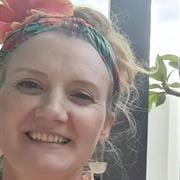
Dr Sonia Fonua
Faculty of Science
Exploring how arts-based creative practices can engage Pacific science learners and upskill science educators
This project explores how arts‑based creative practices (ABCP)—such as visual art, theatre, poetry, and participatory modes of expression—can better engage Pacific students in science courses and support their education in more culturally responsive ways. The project partners with teachers in selected science courses to redesign assessments so students may choose creative formats to demonstrate scientific understanding.
Through evaluating students’ experiences the project aims to build teachers’ capability to develop pedagogies that engage Pacific learners. Expected outputs include an ongoing ABCP community, two symposiums, three journal articles, and multiple conference presentations focused on Pacific learner voice.
Project lead: Sonia Fonua
Additional team members: Tim Baice, Serena Tiaiti, Dr Suzanne Reid, Dr Elizabeth Holt
Learning Leaders Grant
To build capacity


Dr John Egan, Associate Professor Fabiola Aparicio-Ting
CROSS-INSTITUTIONAL PROJECT
SoTL in the Health Sciences: an international collaboration on MCQ assessment
The funding will help further the aspirations of a global collaboration, initiated after ISSOTL 2023 conference, of nearly 50 health‑sciences educators from Canada, NZ, the US, Australia, the Netherlands, the UK, and South Africa. Together they explore SoTL topics, particularly assessment practices, in medical health education.
The Grant is an opportunity to bring the network together, in person, by funding a one‑day SoTL in the Health Sciences pre‑conference at Grafton Campus ahead of ISSOTL 2025 in Christchurch. An additional workshop will also be offered at the STHLE conference in Canada to grow the collaboration further. The initiative will help strengthen research‑informed educational practice and enhance the quality of assessment in programmes that prepare future clinicians and health‑sector graduates.
Co- project leads: John Egan (Faculty of Medical and Health Sciences, University of Auckland), Fabiola Aparicio Ting (Cumming School of Medicine, University of Calgary, Canada)


Dr Abhinaw Sai Erri Pradeep, Dr Garry Miller
FACULTY OF ENGINEERING AND DESIGN
Leading the Transformation of Virtual Classrooms: Enhancing Learner Engagement with Interactive Technologies
Abhinaw’s objective is to enhance virtual teaching within the Faculty of Engineering and Design through introducing an Interactive Online Teaching Space (IOTS). The aim is two-fold: to create a more engaging, interactive online learning experience for students, facilitating a wider adoption of technology‑enhanced learning practices, and to equip teachers with the skills and confidence to deliver richer synchronous virtual classrooms.
Deliverables include: a faculty resource library, an evaluation framework, an impact report on student engagement, and dissemination of findings through seminars, webinars, and potential publications.
Co- project leads: Abhinaw Sai Erri Pradeep, Garry Miller
Additional team members: Dr Roy Davies

Dr Simon Ingram
Enhancing studio-based teaching/supervision through relational pedagogy: a collaborative research project at Elam Te Waka Tuhura School of Fine Arts
Simon’s work focuses on studio‑based teaching and supervision in the Master of Fine Arts (MFA) programme, grounding it more intentionally in relational pedagogy. While existing studio culture already aligns with relational approaches, there has never been a systematic review of how these practices function or how they might better support student success. This project brings MFA students directly into the research process, using the Māori principle of Ako (reciprocal learning) to co‑develop an annotated bibliography of Russell Bishop’s work on culturally responsive pedagogy, along with other relevant scholarship.
Insights from this process will inform future MFA teaching practices, with the broader goal of reshaping the programme to better support student self‑determination, critical thinking, and contemporary artistic research practices. Over time, this work is expected to lay the foundation for a future ‘low‑residency’ MFA option, incorporating digital delivery with intensive in‑person sessions, significantly increasing accessibility and flexibility.
Profile: Simon Ingram
2023 recipients
Development and Innovation Grant
Small-scale projects
Dr Charlotte Jones-Todd
Faculty of Science
A digital greenhouse: a virtual experimental design platform as a cost- and hassle-free in-class data collection tool
Development and Innovation Grant (small-scale project)
Profile: Charlotte Jones-Todd

Mareike Schmidt
Faculty of Arts and Education
Virtual Exchange between UoA and University of Augsburg in Germany
Development and Innovation Grant (small-scale project)
Profile: Mareike Schmidt

Professor JC Gaillard
Faculty of Science
The path of the cohort: developing and orienting multiple learning pathways in our University courses
Development and Innovation Grant (small-scale project)
Profile: JC Gaillard

Dr Amar Al Auckaili
Faculty of Engineering and Design
Implementation of Interactive Quizzing Games in Chemical Engineering Core Courses
Development and Innovation Grant (small-scale project)
Profile: Amar Al Auckaili

Ms Lisa Crowley
Faculty of Arts and Education
Teacher / student co-development of methods for Creative Studio Practice that are grounded in relational and inclusive world views.
Development and Innovation Grant (small-scale project)
Profile: Lisa Crowley
Professor Paul Corballis
Faculty of Science
Postgraduate Coding Bootcamp for Psychology
Development and Innovation Grant (small-scale project)
Profile: Paul Corballis
Dr Abhinaw Sai Erri Pradeep
Faculty of Engineering and Design
Enhancing Experiential Learning: Exploring GPTs for learning Engineering Risk Management
Development and Innovation Grant (small-scale project)
Profile: Abhinaw Sai Erri Pradeep

Dr Nicole Perry
Faculty of Arts and Education
Fostering Relational Learning: Connecting Diverse Learning Communities in a Virtual Space
Development and Innovation Grant (small-scale project)
Profile: Nicole Perry

Dr David Musson
Faculty of Medical and Health Sciences
Efficacy of online course material for providing fundamental content required for MEDSCI 709
Development and Innovation Grant (small-scale project)
Profile: David Musson
Scholarship of Teaching and Learning / Discipline-Based Educational Research Grant
Medium-scale projects

Dr Enrique del Rey Castillo
Faculty of Engineering and Design
Improving Year 1 students’ preparedness for University through self-assessed Study Skills Inventories
Scholarship of Teaching and Learning / Discipline-Based Educational Research Grant (medium-scale project)
Profile: Enrique del Rey Castillo

Dr Timothy Fadgen
Faculty of Arts and Education
Holistic Evaluation of Work-Integrated Public Policy Learning: Interns, Externs, and their Communities of Practice
Scholarship of Teaching and Learning / Discipline-Based Educational Research Grant (medium-scale project)
Profile: Timothy Fadgen

Dr Anna Fergusson
Faculty of Science
Getting the best of both worlds: Integrating human and automated assistance to support student learning via an online question-answering platform
Scholarship of Teaching and Learning / Discipline-Based Educational Research Grant (medium-scale project)
Profile: Anna Fergusson

Dr Johnny Chan
Business School
A GenAI-Driven University Student Project Enhancement Tool
Scholarship of Teaching and Learning / Discipline-Based Educational Research Grant (medium-scale project)
Profile: Johnny Chan

Dr Rachelle Singleton
Faculty of Medical and Health Sciences
Student identity and career aspirations of non-clinical (Bachelor of Science) programme cohorts after Overlapping Year 1
Scholarship of Teaching and Learning / Discipline-Based Educational Research Grant (medium-scale project)
Profile: Rachelle Singleton
Learning Leaders Grant
To build capacity
Professor Gary Barkhuizen
Faculty of Arts and Education
Developing, researching and promoting the Casebook Method in language teacher education
Learning Leaders Grant (to build capacity)
Profile: Gary Barkhuizen

Dr Marcia Leenen-Young
Faculty of Arts and Education
Conceptualising Pacific Pedagogies
Learning Leaders Grant (to build capacity)
Profile: Marcia Leenen-Young
2022 recipients
Development and Innovation Grant
Small-scale projects

Dr Hazim Namik
Faculty of Engineering and Design
A Better Quizzing Platform for STEM Subjects
Development and Innovation Grant (small-scale project)
Profile: Hazim Namik

Dr Camilla Highfield
Faculty of Arts and Education
Development of a toolkit to support cross-cultural postgraduate supervision
Development and Innovation Grant (small-scale project)
Profile: Camilla Highfield
Dr Amar Auckaili
Faculty of Engineering and Design
A qualitative study of student engagement in a flipped classroom
Development and Innovation Grant (small-scale project)
Profile: Amar Auckaili

Dr Andrea Kolb
Faculty of Engineering and Design
Coaching framework for success with the entrepreneurial mindset profile (EMP)
Development and Innovation Grant (small-scale project)
Profile: Andrea Kolb

Dr Thomas Aditya Loho
Faculty of Engineering and Design
Materials Science in everyday life – Case study assessments for first-year engineering students
Development and Innovation Grant (small-scale project)
Profile: Thomas Loho

Dr Richey Wyver
Faculty of Arts and Education
Friends, Family and Food: How Can Relational Learning Improve Student Attendance and Engagement?
Development and Innovation Grant (small-scale project)
Scholarship of Teaching and Learning / Discipline-Based Educational Research Grant
Medium-scale projects

Associate Professor Eleanor Hawe
Faculty of Arts and Education
Investigating Assessment for Learning (AfL) as a signature pedagogical practice in a professional degree programme
Scholarship of Teaching and Learning / Discipline-Based Educational Research Grant (medium-scale project)
Profile: Eleanor Hawe

Dr Nasser Giacaman
Faculty of Engineering and Design
An Automated Polyglot Feedback and Assessment Tool for Software Code Style
Scholarship of Teaching and Learning / Discipline-Based Educational Research Grant (medium-scale project)
Profile: Nasser Giacaman

Professor Paul Denny
Faculty of Science
Transforming the Pedagogical Practice of Computer Science with AI Code-Generation Models
Scholarship of Teaching and Learning / Discipline-Based Educational Research Grant (medium-scale project)
Profile: Paul Denny

Dr Jo Smith
Faculty of Arts and Education
The intersection of policy and leadership
Scholarship of Teaching and Learning / Discipline-Based Educational Research Grant (medium-scale project)
Profile: Jo Smith
Learning Leaders Grant
To build capacity
Dr Claire Donald
Faculty of Engineering and Design
Leadership in Engineering Education
Learning Leaders Grant (to build capacity)
Profile: Claire Donald

Gail Ledger
Faculty of Arts and Education
Grand Designs: Negotiating place to advance relational teaching practices
Learning Leaders Grant (to build capacity)
Profile: Gail Ledger
Page updated 09/01/2026 (added 2025 recipients’ projects)